High-density polyethylene (HDPE) piping systems are most often joined using heat fusion—a method that creates a continuous, leak-free pipeline with long-term reliability.
However, fusion is not always the right or practical solution for every connection point.
Flanged connections play a critical role in HDPE systems where access, serviceability, or material transitions are required. These mechanical connections allow HDPE pipe to interface with valves, pumps, and other piping materials while still maintaining system integrity when properly designed and installed.
This article explains when flanged connections should be used in HDPE piping systems, how they compare to fusion joints, and what engineers and contractors must consider to ensure reliable performance in the field.
What Is a Flange Connection in HDPE Systems?
What is a flange connection in HDPE piping?
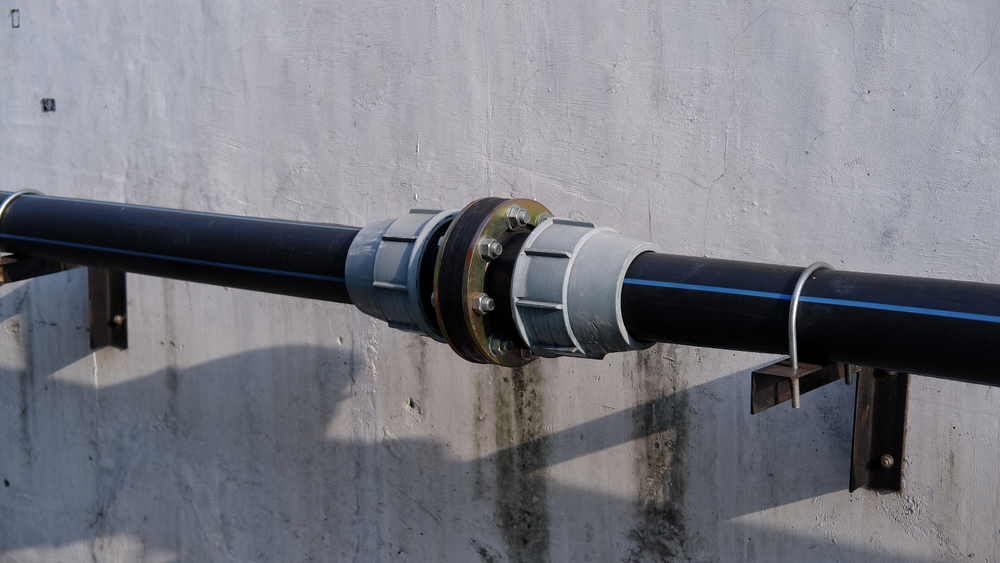
A flange connection in HDPE piping is a mechanical joint that uses a fused stub end, backing ring, gasket, and bolts to create a removable connection. It’s typically used at equipment interfaces, material transitions, or locations requiring future access.
Unlike fusion joints, which create a single continuous pipe, flanged connections are designed to be removable and serviceable.
How HDPE Flange Connections Work:
A typical HDPE flange assembly consists of:
- HDPE stub end fused to the pipe
- Metal backing ring that provides structural support
- Gasket placed between mating flange faces
- Bolts and nuts tightened to compress the gasket and create a seal
The stub end is fused to the HDPE pipe using standard fusion methods, while the backing ring allows the connection to be bolted to another flange—such as a valve, pump, or transition fitting.
How Flanges Differ From Fusion Joints:
Fusion joints:
- Are permanent
- Create a continuous, leak-free pipeline
- Are ideal for long, buried, or uninterrupted pipe runs
Flanged connections:
- Are mechanical and removable
- Allow disassembly for maintenance or equipment replacement
- Introduce an intentional connection point that must be properly aligned and torqued
Flanged Connections vs. Fusion Joints in HDPE Piping
Both fusion joints and flanged connections play important roles in HDPE piping systems—but they serve different purposes.
The table below outlines the key differences to help engineers and contractors select the right connection method for each application.
HDPE Fusion Joints vs. Flanged Connections: |
||
|
Feature |
Fusion Joints |
Flanged Connections |
|
Connection type |
Permanent, heat-fused |
Mechanical, bolted |
|
Leak potential |
Extremely low when properly fused |
Dependent on alignment, gasket, and bolt torque |
|
Strength |
Equal to or stronger than the pipe |
Lower than fusion; designed for serviceability |
|
Serviceability |
Not removable |
Fully removable for maintenance |
|
Maintenance needs |
Minimal |
Periodic inspection and re-torque may be required |
|
Best use cases |
Long pipe runs, buried lines, continuous systems |
Valves, pumps, equipment interfaces, material transitions |
|
Installation considerations |
Fusion parameters, cleanliness, alignment |
Gasket selection, bolt torque, flange alignment |
|
Ideal system role |
Primary connection method |
Strategic access and transition points |
Design Guidance for HDPE Systems:
- Fusion joints should be used wherever continuity, strength, and long-term leak prevention are required.
- Flanged connections should be used selectively at points where access, disassembly, or material compatibility is required.
Key takeaway:
Flanged connections are not a fusion replacement; they are a strategic complement within well-designed HDPE piping systems.
Are flanged connections as strong as fusion joints in HDPE piping?
No. Fusion joints form a continuous, permanent pipe system, while flanged connections are mechanical joints intended for access, equipment interfaces, and transitions. Both are reliable when used correctly.
When Flanged Connections Are the Right Choice For HDPE Piping
While fusion is the preferred method for most HDPE piping systems, certain applications require the flexibility and access that only flanged connections can provide. In these scenarios, flanges are not optional—they are the correct engineering solution.
Below are the most common situations where flanged connections are preferred or required in HDPE systems.
1. Connections to Valves, Pumps, and Mechanical Equipment
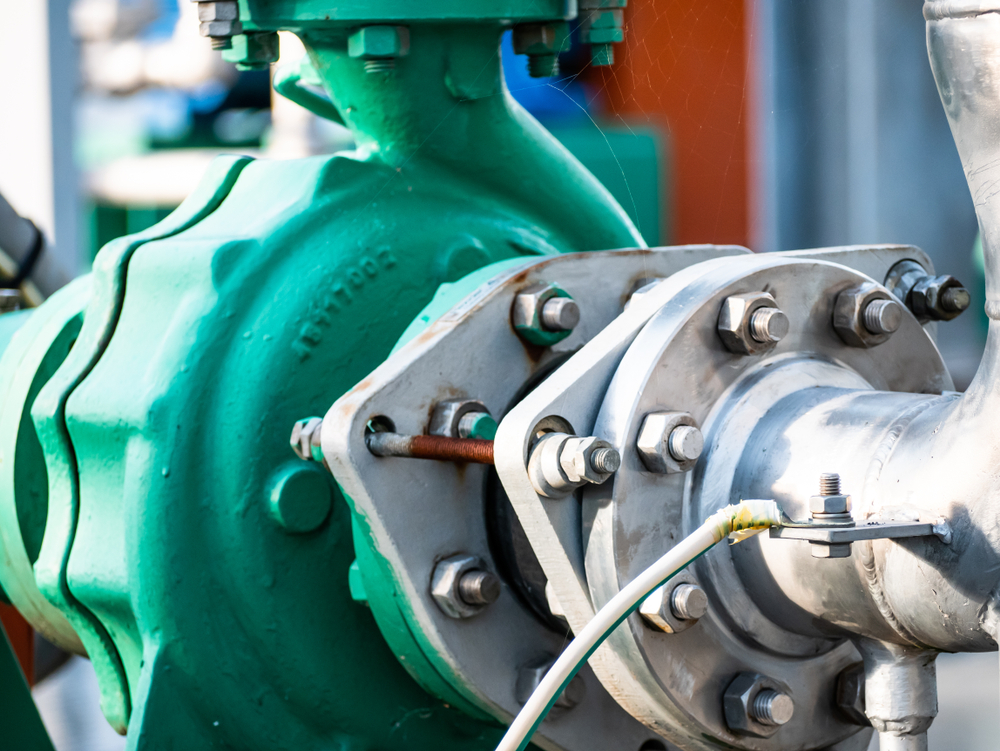
Valves, pumps, meters, and other mechanical equipment are typically manufactured with flanged inlets and outlets. Because this equipment often requires maintenance, inspection, or replacement, permanent fusion connections are not practical.
Flanged connections allow HDPE piping systems to:
- Isolate equipment for service
- Remove or replace components without cutting pipe
- Maintain proper alignment and load distribution at equipment interfaces
In these applications, flanges provide both accessibility and system protection, reducing downtime and simplifying future maintenance.
2. Transitions Between HDPE and Other Pipe Materials
HDPE systems frequently connect to existing infrastructure or equipment made from other materials, such as:
- Carbon steel or stainless steel
- Ductile iron
- PVC or CPVC
- Lined or specialty piping systems
Flanged connections offer a controlled, standardized transition point between dissimilar materials. They accommodate differences in stiffness, thermal expansion, and installation tolerances better than rigid mechanical couplings or field-fabricated transitions.
For mixed-material systems, flanges are often the safest and most reliable transition method.
3. Systems Requiring Frequent Access or Disassembly
Some HDPE piping systems are designed with future access in mind. These include:
- Maintenance-intensive process systems
- Temporary or modular installations
- Systems expected to expand or change over time
Flanged connections make it possible to disassemble sections of the system without cutting and re-fusing pipe, preserving system integrity while reducing labor and downtime.
4. Tie-In Points and Equipment Interfaces
Flanges are commonly used at system tie-ins where HDPE piping connects to:
- Meter vaults
- Skid-mounted equipment
- Prefabricated assemblies
- Facility or plant interfaces
These locations often require precise alignment, inspection access, and the ability to disconnect without disrupting the rest of the pipeline. Flanged connections provide a predictable, serviceable interface at these critical points.
Summary: When should you use flanges instead of fusion in HDPE piping?
Flanges should be used when connecting HDPE pipe to valves, pumps, or mechanical equipment; transitioning to other pipe materials; or in systems that require future access, maintenance, or disassembly.
Limitations and Trade-Offs of Flanged HDPE Connections
While flanged connections are essential in specific HDPE piping applications, they also introduce trade-offs that must be understood during system design and installation.
Using flanges in the wrong locations (or installing them improperly) can increase risk and long-term maintenance requirements.
Below are the key limitations contractors and engineers should consider when specifying flanged connections in HDPE systems.
Potential Leak Points:
Unlike fusion joints, flanged connections rely on gasket compression and bolt tension to maintain a seal. If alignment, gasket selection, or torque is incorrect, flanges can become leak points—especially under pressure or thermal cycling.
This does not make flanges unreliable, but it does mean they require more attention to detail than fused joints.
Sensitivity to Bolt Torque and Installation Practices:
HDPE flange connections are particularly sensitive to overtightening and uneven bolt loading. Common issues include:
- Gasket extrusion or damage from excessive torque
- Warped flange faces caused by uneven tightening
- Loss of bolt tension over time due to HDPE creep
Proper torque values, cross-pattern tightening, and re-torque procedures are critical for long-term performance.
Space and Alignment Requirements:
Flanged connections require adequate space for:
- Bolt installation and tightening
- Proper alignment of mating flange faces
- Future access for inspection or maintenance
In tight installations or buried applications, these space requirements can be difficult to accommodate, making fusion a better option.
Not Ideal for Continuous or Buried Pipeline Sections:
Because flanges introduce mechanical joints and access needs, they are generally not recommended for long, buried, or continuous pipeline runs where fusion provides a more durable, maintenance-free solution.
Flanges should be used intentionally and sparingly—only where their benefits outweigh their limitations.
Installation Considerations for Reliable HDPE Flange Connections
Proper installation is critical to the long-term performance of flanged connections in HDPE piping systems. Unlike fusion joints, flanges rely on mechanical components and precise installation practices to maintain a reliable seal.
What causes HDPE flange connections to leak?
Most HDPE flange leaks are caused by improper alignment, incorrect gasket selection, uneven or excessive bolt torque, or insufficient inspection during installation.
The following considerations help reduce leak risk, prevent premature failures, and ensure flanged HDPE connections perform as intended.
Proper Alignment and Face Squareness:
Flange faces must be parallel and properly aligned before bolts are tightened. Even minor misalignment can prevent uniform gasket compression, leading to leaks or flange distortion.
Best practices include:
- Verifying flange faces are square and parallel
- Avoiding forced alignment using bolts
- Supporting pipe and equipment to eliminate external loads on the flange
- Misalignment is one of the most common causes of flange leaks in HDPE systems.
Gasket Selection for HDPE Flanges:
The gasket is a critical sealing component and must be selected based on both application and compatibility.
Key considerations include:
- Chemical compatibility with the conveyed media
- Pressure and temperature requirements
- Proper thickness and material hardness
Using the wrong gasket material can result in chemical attack, extrusion, or loss of sealing pressure over time.
Bolt Torque and Tightening Sequence:
HDPE flange connections are especially sensitive to bolt torque. Overtightening is a frequent installation mistake and can cause gasket failure or flange deformation.
Recommended practices include:
- Using manufacturer-specified torque values
- Tightening bolts in a cross-pattern sequence
- Applying torque gradually in multiple passes
- Avoiding impact tools unless explicitly approved
Controlled, even compression is essential for a leak-free connection.
Field Best Practices to Prevent Leaks:
To improve reliability in the field, contractors should also:
- Inspect flange faces and gaskets before assembly
- Verify bolt length and washer placement
- Re-check torque after initial pressurization when required
- Document installation torque values for quality control
How US FUSION Supports Proper Flanged HDPE Installations
Successful flanged connections in HDPE systems depend on more than selecting the right components—they require coordination between design, fabrication, and field execution.
US FUSION supports contractors and engineers by providing practical expertise across the full scope of HDPE system installation.
Rather than treating flanges as standalone components, US FUSION integrates flanged connections into fully engineered HDPE piping systems to ensure compatibility, performance, and long-term reliability.
System-Level Expertise, Not Just Components:
We bring experience from complex HDPE installations across industrial, municipal, and infrastructure applications.
This system-level perspective helps teams avoid common issues such as misapplied flanges, improper transitions, or installation methods that increase long-term risk.
Support includes:
- Guidance on the correct flange type and configuration
- Integration of flanged connections with fused HDPE pipe runs
- Alignment considerations at equipment and transition points
Field Execution That Reduces Risk:
Improper installation is one of the leading causes of flange-related failures. US FUSION supports proper execution through:
- On-site expertise during installation and tie-ins
- Coordination with fusion technicians and contractors
- Verification of alignment, gasket selection, and torque procedures
This hands-on approach helps reduce rework, inspection failures, and unplanned downtime.
A Trusted Partner for HDPE System Performance:
By supporting both the design intent and field execution of flanged HDPE connections, US FUSION helps contractors deliver systems that meet specifications, pass inspection, and perform reliably over the long term.
Rather than relying on assumptions in the field, project teams can consult US FUSION to ensure flanged connections are used—and installed—the right way.
Trust US FUSION To Use Flanged Connections the Right Way in HDPE Systems
Flanged connections play a vital role in HDPE piping systems—but only when they are used intentionally and installed correctly.
Fusion remains the preferred method for most HDPE applications, but flanges provide necessary access points for equipment interfaces, material transitions, and serviceable system components.
Understanding when to use flanged connections, recognizing their limitations, and following proper installation practices helps reduce leak risk, prevent rework, and extend system life.
US FUSION supports contractors and engineers by applying real-world experience to every phase of HDPE system design and installation. From selecting the appropriate connection method to executing critical tie-ins in the field, we help ensure HDPE systems perform as intended—both at startup and over the long term.
For projects that require flanged connections, consult with US FUSION to avoid costly mistakes and ensure the right solution is applied from the start.