by archiveduser | Oct 15, 2022 | Geosynthetic Liners
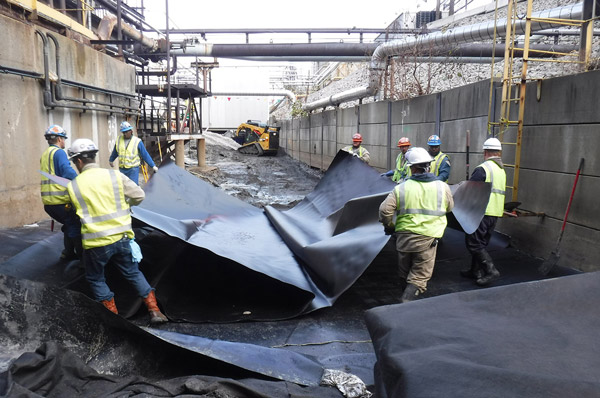
Managing spills and leaks on construction sites is important in maintaining the safety of workers, facilities, and surrounding environments. A well-designed secondary containment system will help get you there.
Here’s the scoop on what secondary containment is, what secondary containment requirements are, and how to find the secondary containment solution that’s right for your application.
What Is Secondary Containment?
Secondary containment is any system, device, or control measure that’s used to stop a substance from seeping into a specified area. You can think of it as your primary container’s backup plan. If your storage tank or oil drum leaks, your secondary containment solution will provide an extra layer of protection to keep the spill contained.
Why Is Secondary Containment Needed on Construction Sites?
It’s a safety precaution. There are a variety of materials and substances used throughout the construction process, some of which are hazardous to human and/or environmental health — think oil, fuel, combustible materials, hazardous waste, salts, pollutants, etc.
If the primary container holding that substance starts to leak, you need a secondary containment system to catch the spill and prevent a larger, more dangerous mess.
Types of Secondary Containment Systems
Since every construction application has different needs, there aren’t any requirements for what secondary containment systems need to look like. There are only requirements for what it needs to accomplish.
Therefore, there are many different types of secondary containment systems used. Here are a few common ones:
Secondary Containment Requirements for Construction Sites
Secondary containment is required by several federal, state, and local regulations. These requirements vary based on entity, as well as by the type and quantity of hazardous substances handled. You may even have substances that are regulated by more than one agency under different regulations. In that case, it’s best to contact each agency and possibly schedule a joint meeting to discuss the best plan of action.
Since secondary containment requirements can vary, we’ll stick to some of the most common, generally accepted, and adhered-to standards from the Environmental Protection Agency (EPA). Remember that this is not the full list of secondary containment requirements, so be sure to dig deeper into state and local regulations for your specific application.
EPA’s Secondary Containment Requirements
The main EPA regulation that outlines secondary containment requirements is EPA 40 CFR 264.175. It dictates five main requirements:
- Perviousness — Your secondary containment system must underlie primary containers, and be free of cracks and gaps so that leaks and spills are completely contained.
- Slope — Your secondary containment system base must be sloped, or it must be designed to drain and remove spilled substances. This is so your primary container doesn’t sit in its own waste.
- Retention Capacity — Your secondary containment system must have the capacity to contain 10% of the volume of all primary containers or 100% of the volume of the largest primary container — whichever is greater.
- Precipitation Prevention — Your secondary containment system must prevent precipitation from entering, unless it has enough capacity to hold that precipitation along with other substances and retention capacity requirements.
- Waste Removal — Any substances that have spilled into your secondary containment system should be inspected and cleaned up as soon as possible to prevent overflow.
How to Find the Secondary Containment Solution That’s Right for Your Application
Now that you have a preliminary understanding of secondary containment requirements, you may have a better idea of what secondary containment solution is suitable for your project. But to make sure you’re making the safest, more effective decision, it’s always best to talk with a secondary containment specialist like US FUSION.
We’ll help you figure out which type of secondary containment is best and how to install it in a way that meets all requirements from applicable regulatory agencies. But most of all, we’ll install it in a way that keeps your people, facility, and environment free from harm.
Contact US FUSION’s Secondary Containment Specialists
To ensure your project and facility are in complete compliance, a secondary containment system is necessary. If you need help finding the right secondary containment solution for your specialty construction project, contact US FUSION. Our specialists can help answer your questions, supply the products you need, and install them for maximum environmental control.
by archiveduser | May 6, 2022 | Geosynthetic Liners
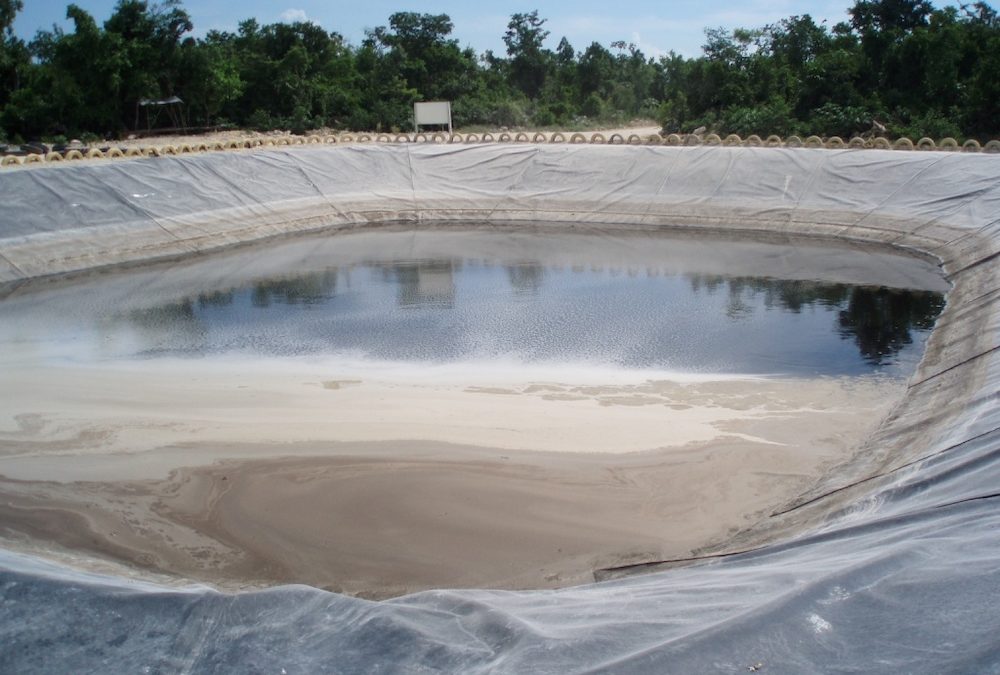
No matter what you’re building or where you’re building it, you have to think about the soil on your construction site. You may need to protect it from erosion, increase its stability, protect it from chemicals, or control how water flows through it. For each of these concerns, geosynthetic materials like geosynthetic liners or geocells can provide immense benefits.
If you’re building new fuel storage tanks or putting in a municipal septic system, you’ll need geosynthetic materials. But what are they and what do they do? Read on for a brief synthesis of geosynthetic materials and their applications and benefits.
What are geosynthetic materials?
Geosynthetic materials are man-made materials that are used to protect or improve soil quality. There are several key categories of geosynthetics:
- Geotextiles
- Geocells
- Geogrids
- Geomembranes
Geotextiles
Geotextiles are fabric-like (hence “textiles”) and are felted or woven synthetic materials. These textiles often come on rolls and are similar in look and feel to landscape fabric. This geosynthetic cloth is used for its permeability and filtration characteristics, as well as its flexibility and tensile strength.
Geocells
Geocells are webs of cells formed from synthetics molded into an accordion-like structure, expanding when unfurled. These cells can be filled with filtration or fill materials like gravel or soil when the cellular confinement system (the overarching term for geocells and similar systems) is spread on a landscape.
Geogrids
Geogrids are geosynthetics that are formed into flat, intersecting grids—they look like temporary construction fencing. The open spaces in geogrids (called apertures) vary in size, depending on the desired stiffness of the material, and this design helps distribute loads over wider areas, increasing soil stability. Geogrids can be created via extrusion, weaving, or welding and extrusion.
Geomembranes
Geomembranes are the least permeable of the geosynthetic materials we’ve covered, as they’re generally used to control the movement of fluids. They are made of polymer sheets or from geotextiles treated with polymer spray.
What are geosynthetic materials used for?
At a high level, geosynthetic materials are used to protect soil. This includes reinforcing soil, preventing soil movement or loss, improving load distribution on level or sloped soil, separating soils, controlling water flow through soil, and containing liquids or preventing fluids from permeating soil. This means that when we get into specifics, geosynthetic materials and geosynthetic liners have hundreds of specialized applications for a variety of industries.
Geosynthetic material applications in the construction industry
One of the main uses of geosynthetic materials is for secondary containment. Secondary containment systems are used in conjunction with primary containment systems (that is, containers or tanks) to prevent discharge from escaping into an uncontained area. Essentially, it’s a backup containment system in case the main system you’re using to contain a material leaks or fails.
Secondary containment applications for geosynthetics include:
- Aboveground storage tanks and foundation ringwall liners
- Secondary containment levees, berms, and dikes
- Spill containment berms
- Leach fields
Geosynthetic liners can also be used for primary containment and storage, particularly for water. Some use cases include:
- Pond liners
- Brine ponds
- Stormwater ponds
- Temporary storage pits
- Fuel reserve pits
- Landfill Liners
It is also the case that some sort of containment is needed for situations where hazardous or potentially hazardous materials are being used or stored as a spill pad, kind of like putting down a tarp before you paint something. Potential uses in this category include:
- Concrete protection
- Drilling pad liners
- Remediation pads
- Frac tanks
- Decontamination liners
Additionally, in some applications, like erosion control or environmental restoration, geosynthetic materials like mats and tubes may be used in combination with biodegradable materials, such as blankets made from coconut, straw, jute, or other natural fibers. This is generally to prevent soil erosion and to protect germinating plant life from stormwater runoff, wind, and animals.
Industries
Geosynthetic materials and systems are used in many industries requiring specialty construction. Here are just some of the industries that commonly require the use of geosynthetic materials and liners:
- Agriculture
- Fertilizer
- Landfill
- Wastewater treatment
- Petrochemical
- Chemical
- Construction
- Industrial construction
- Manufacturing
- Infrastructure
- Water resources management
- Environmental services
- Power and energy
- Industrial waste management
- Mining
- Industrial wastewater management
What are the benefits of using geosynthetic materials?
Each type of geosynthetic material has its own specific uses and, therefore, its own performance characteristics and benefits. But generally speaking, the benefits of geosynthetic materials are their tensile strength, durability, and permeability or impermeability, depending on the use. For containment or water flow control, impermeability is essential; for erosion control or soil stabilization, permeability is necessary to allow for natural soil behavior and health, as well as to avoid creating unintended water flow or runoff issues.
Geogrids and geotextiles are excellent for soil reinforcement and stabilization because of their resistance to environmental and construction damage, as well as their high tensile modulus and strength. Geomembranes are also resistant to damage, particularly chemical and hazardous material damage, which, paired with their impermeability, make them ideal for primary and secondary containment applications.
If you’re in need of a foolproof secondary containment system, geosynthetic liners are a great choice. And at US FUSION, our experts have decades of experience in installing them properly, safely, and efficiently. Contact our team to learn more about how we can help with your project.
by archiveduser | Dec 1, 2021 | Geosynthetic Liners
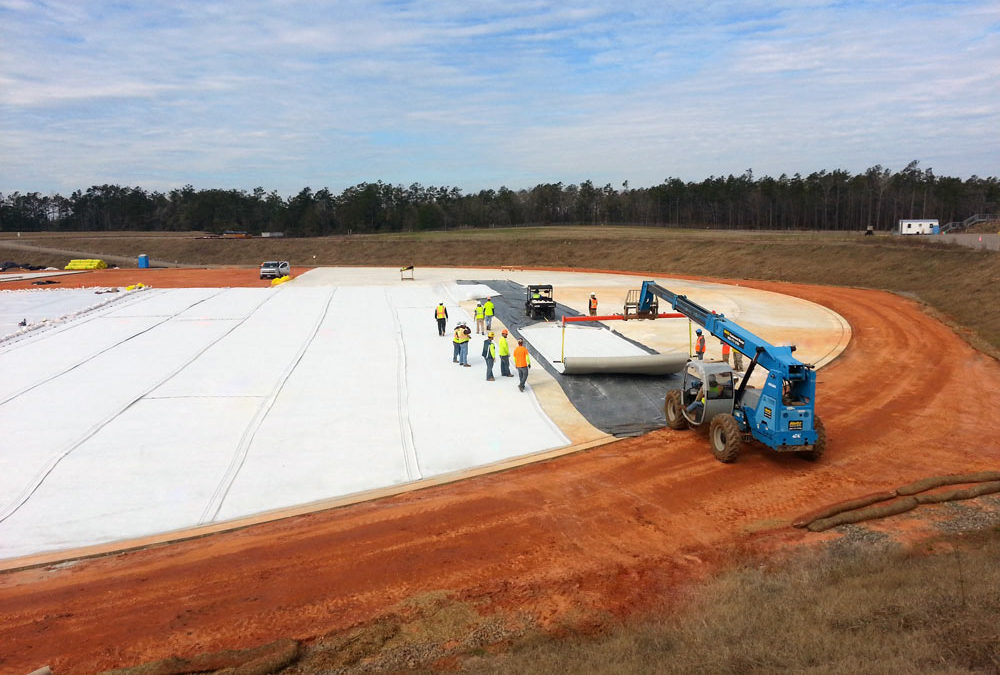
If your facility is at risk for experiencing a spill or leak, you need a comprehensive and durable containment solution to mitigate hazardous environmental exposure. A properly installed geosynthetic clay liner can provide reliable containment that protects soil and groundwater from hazardous materials. And if your facility has already experienced a spill or leak, you need a solution fast.
When it comes to containment and waste management, US FUSION is your expert in rapid response and problem solving. We make sufficient repairs, we prevent future disasters, and we commonly do it using a geosynthetic clay liner as part of engineered geosynthetic containment systems designed for industrial facilities.
Below, we’ll walk through what a geosynthetic clay liner is, as well as several common geosynthetic clay liner uses that help facilities maintain environmental compliance.
What Are Geosynthetic Clay Liners?
A geosynthetic clay liner is a hydraulic barrier manufactured using low-permeability materials combined with geotextiles and geomembranes. These materials are bonded together through chemical adhesives and mechanical processes such as extrusion to create an effective containment layer.
A geosynthetic clay liner is primarily used for waste management and containment applications where environmental protection is critical. Many environmental regulations require facilities to contain potentially harmful seepage before it contaminates surrounding soil or groundwater. Because of their durability and fast installation, geosynthetic clay liner uses are increasingly common across modern geosynthetic containment systems.
Facilities implementing containment strategies often rely on engineered geosynthetic liner systems to ensure proper installation and long-term environmental protection.
5 Geosynthetic Clay Liner Applications
A geosynthetic clay liner can support a wide range of containment projects. Many industrial facilities depend on these geosynthetic clay liner uses to improve the performance of geosynthetic containment systems designed to protect surrounding environments.
In this article, we’ll walk through five of the most common applications.
1. Geosynthetic Clay Liners for Landfills
Landfills are designed to contain and manage waste in a responsible manner. When managed improperly, they can become a major contributor to environmental damage.
One of the most critical geosynthetic clay liner uses is landfill containment. A geosynthetic clay liner prevents solid and liquid waste from seeping into soil and contaminating groundwater. Because of their durability and cost effectiveness, these liners are widely used in geosynthetic containment systems built to protect landfill infrastructure.
2. API Tanks & Foundation Liners
API stands for the American Petroleum Institute, which sets standards for the design and fabrication of steel storage tanks used to store oil, gasoline, and chemicals. One such requirement often includes a geosynthetic clay liner or other low-permeability barrier beneath storage tanks.
These geosynthetic clay liner uses help protect the surrounding environment by preventing leaks from reaching the ground beneath the tank foundation. In many industrial projects, a geosynthetic clay liner is incorporated into larger geosynthetic containment systems designed to manage spills and maintain regulatory compliance.
3. Geosynthetic Clay Liners for Ponds
A geosynthetic clay liner can also be used for water containment applications such as ponds or reservoirs. While some ponds rely on natural clay bottoms, others require engineered geosynthetic containment systems to maintain water levels and prevent seepage.
Among common geosynthetic clay liner uses, pond lining helps retain water while preventing sediment intrusion and environmental contamination. Installing a geosynthetic clay liner with proper soil cover provides a durable and reliable containment barrier for long-term water management.
4. Earthen Spill Containment Berms
Earthen spill containment berms are structures designed to prevent hazardous materials from spreading beyond a designated area. These containment areas are commonly built beneath equipment such as oil drums or storage tanks.
A geosynthetic clay liner adds an additional layer of protection to these berms by preventing spilled materials from penetrating the soil. Many geosynthetic clay liner uses involve integrating liners into geosynthetic containment systems that protect facilities from environmental contamination and regulatory violations.
5. Secondary Containment Dikes, Berms & Levees
Secondary containment systems act as a backup in case the primary containment system fails. Installing a geosynthetic clay liner inside secondary containment dikes, berms, or levees provides an additional safeguard against environmental damage.
These geosynthetic clay liner uses are essential for facilities handling hazardous materials. Because of their versatility and durability, a geosynthetic clay liner is frequently used within larger geosynthetic containment systems designed to meet strict environmental regulations.
Get Expert Help Selecting the Right Geosynthetic Clay Liner
If you need a comprehensive containment solution for your application, you can trust US FUSION to deliver excellence. With decades of experience designing and installing geosynthetic clay liner solutions and advanced geosynthetic containment systems, our team provides rapid response, quality workmanship, and environmental responsibility throughout every stage of the project.
Give us a call or contact us online so we can help determine the most effective containment solution for your application.